Avoid Costly Claim Errors That Shrink Your Payout
Filing a property insurance claim after your Houston home is damaged is stressful enough. One small mistake in those early days can slow everything down or lead to a smaller payout than you expected.
Storms, wind, hail, and sudden flooding hit our area hard, especially in summer. When many homeowners file claims at the same time, insurance companies look very closely at how you report damage, what proof you provide, and how well you follow the process. In this article, we will walk through common mistakes Houston homeowners make with documentation, deadlines, mitigation steps, and communication, and how to avoid them so your claim has the best chance of going smoothly.
Overlooking Documentation From Day One
The claim starts long before the adjuster shows up. It starts with how you document the damage on day one.
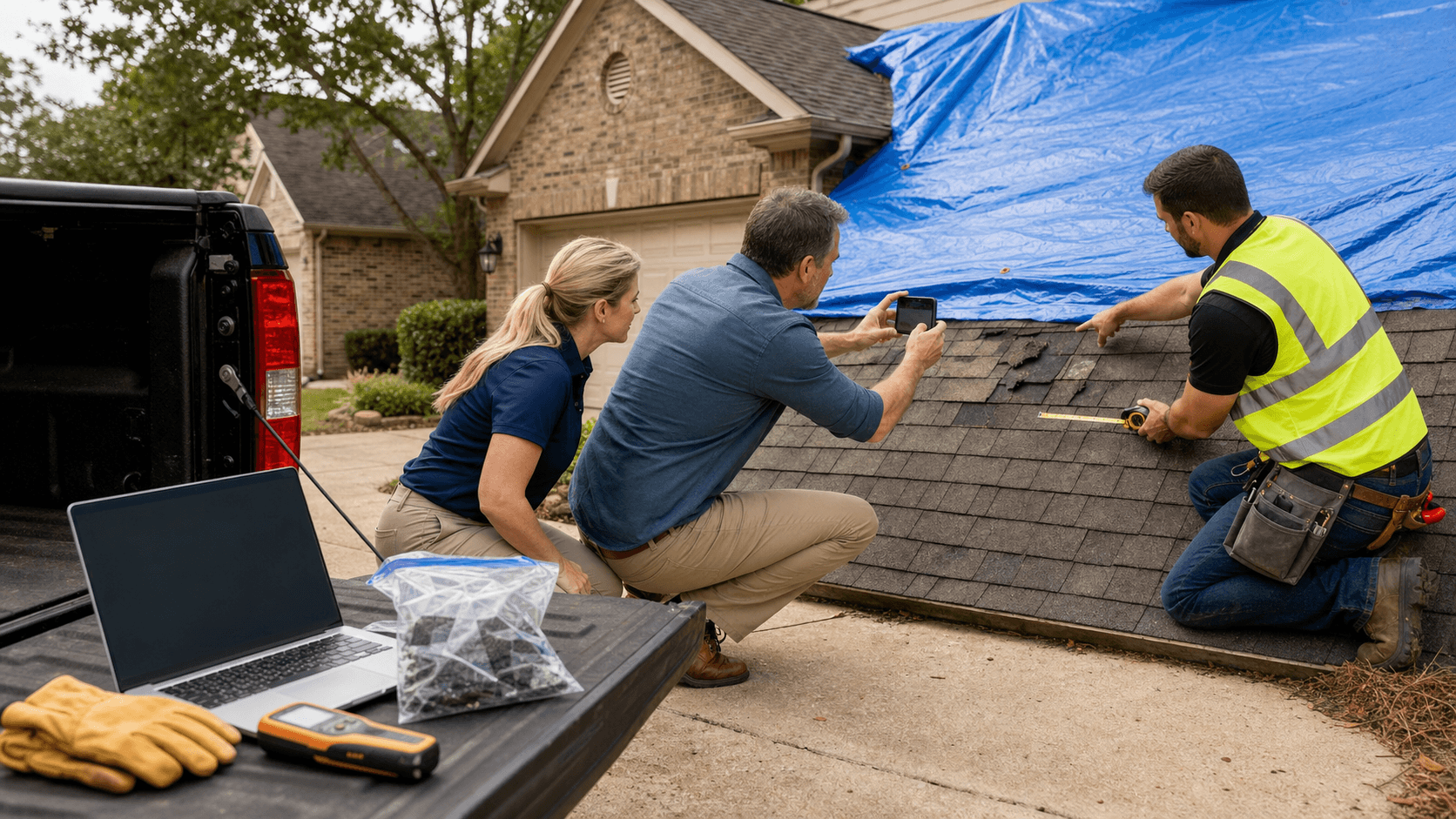
One big mistake is not photographing damage thoroughly. A few quick pictures on your phone usually are not enough. You want your photos to help tell the full story of what happened.
Good photo habits include:
- Wide shots of each room or area that was affected
- Close-ups of specific damage like cracks, stains, or broken items
- Multiple angles of the roof, siding, fence lines, and yard
- Photos of hidden spots like the attic, closets, and storage areas
Many homeowners forget places like the attic, detached garages, sheds, or items in closets and cabinets. Roof details, fence damage, and outdoor furniture also get missed a lot, especially after wind and hail.
Another mistake is skipping a written damage inventory. Photos are great, but you also need a list. Go room by room and write down:
- Item name and brief description
- Approximate purchase date or age
- Estimated value or what it would cost to replace today
- Any model or serial numbers you can find
Keep receipts and invoices if you have them. A simple spreadsheet or note-taking app can keep it all in one place and make it easier to share with the adjuster.
Many property insurance policies in Houston, TX, include coverage for Additional Living Expenses, often called ALE, when you cannot stay in your home during repairs. A common mistake is not keeping proof of these extra costs. If you have to stay in a hotel, eat more meals out, or drive farther to work or school, keep:
- Hotel receipts
- Meal and grocery receipts
- Extra transportation or parking receipts
Displacement is common after hurricanes or major water damage in our area, and these living expense records can be a big help in your claim.
Missing Critical Deadlines in the Claims Process
Timing matters. Another set of mistakes shows up when homeowners wait too long to act.
Delaying the initial claim report can cause problems. Once it is safe, do a quick check of the property and contact your insurer as soon as you notice damage. During busy storm months like July, waiting even a few days can:
- Make it harder to prove when the damage happened
- Raise questions about whether more damage could have been prevented
- Put you at the back of a long line for inspections
Policies also have their own time limits, and ignoring those can hurt your claim. Many policies include deadlines for the following:
- Reporting the loss
- Turning in documents and estimates
- Requesting a reinspection or filing a supplemental claim
Review your declarations page and policy, and if something is not clear, talk with your agent so you know your time frames.
Even when you report quickly, communication gaps can stall the claim. If you do not respond to requests for more photos, forms, or details, the claim may sit on hold. A simple claim calendar can help. Write down:
- Date you reported the claim
- Dates and times of inspections
- When you sent documents or photos
- When you followed up or left messages
This keeps you organized and shows that you are staying engaged.
Not Taking Reasonable Steps to Prevent More Damage
After a loss, homeowners are expected to protect the property from getting worse. This is called mitigation, and people often mix it up with full repairs.
Mitigation means short-term steps to prevent more damage, not full rebuilding right away. Helpful examples include:
- Tarping or covering a damaged roof section
- Shutting off water to a leaking pipe or appliance
- Boarding up broken windows or doors to keep out rain and debris
Permanent repairs usually should wait until after the adjuster has a chance to inspect, unless there is an immediate safety issue. If you are not sure, speak with your insurer or agent before making big changes.
Another common mistake is throwing away damaged items too soon. It is natural to want ruined things gone, especially if they are wet or smell bad. But if the adjuster never sees them, it may be harder to get them covered. Whenever possible:
- Store damaged items in a garage, shed, or one room
- Label boxes by room or type of item
- Take clear photos of everything before you move or discard it
Do not forget receipts for mitigation costs. Emergency work adds up, and many homeowners leave money on the table by not tracking it. Save invoices and receipts for:
- Water extraction and drying services
- Temporary roofing or tarping
- Board-up services and debris removal
In property insurance in Houston, TX, quick mitigation is especially important during heavy rain and hurricane season. Vendors can book up fast, so taking action and documenting costs right away can protect both your home and your claim.
Mismanaging Communication with Insurers and Contractors
How you talk with your insurer and your contractors can help or hurt your claim.
Relying only on phone calls and memory is risky. Details blur, and people may remember conversations differently. After important phone calls, send a short follow-up email from your own notes that includes:
- Date and time of the call
- Who you spoke with
- What was agreed to or promised
Keep a simple claim log as well, with names, numbers, and key decisions from both adjusters and contractors.
Another mistake is not asking questions or asking for clarity. Many homeowners accept denials or partial payments without really understanding why. If something does not make sense, it is okay to:
- Ask for a written explanation
- Request that the adjuster show you where in the policy a decision is based
- Talk with your independent agent for help reading the policy language
You should also be careful about letting contractors speak for you without oversight. Some forms like broad assignments of benefits can hand over a lot of control. To protect yourself:
- Read any document fully before signing
- Avoid signing anything you do not understand
- Work with licensed, reputable local contractors who know Houston building codes
Any conversation with your insurer should match your understanding and your goals for your home.
Partner with a Houston Team That Knows the Claim Maze
The best time to prepare for a claim is before a storm ever shows up on the radar. We always encourage homeowners to review their coverage ahead of storm season. Take time to check:
- Your deductibles for wind, hail, and named storms
- Any special limits on water damage or personal property
- Whether you understand what your policy does and does not cover
It also helps to create a digital home file in advance. Walk through your home with your phone and take photos of each room, major systems, and big-ticket items. Save copies of major receipts. If you ever have a loss, you will already have a baseline that shows what was there before the damage.
At Navigant Insurance, our independent, Houston-based team has spent more than 2 decades helping local families and businesses with claims and coverage. We focus on helping clients understand their policies, gather the right documentation, and communicate clearly with carriers, from the first notice of loss to the final settlement. Our team approach means you are not dealing with the claim maze alone.
Ricky Wong and the entire Navigant Insurance team work together to support homeowners and business owners across the Houston area. We are committed to long-term relationships, personal guidance on home, auto, and commercial insurance, and being a trusted resource before, during, and after a property claim.
Protect Your Houston Property With Coverage Tailored To You
If you own or manage a commercial building, now is the time to review your coverage and close any gaps before the next storm or unexpected loss. At Navigant Insurance, we take the time to understand your risks and match you with the right property insurance in Houston, TX for your operations and budget. Reach out today so we can answer your questions, walk you through your options, and help you feel confident in your protection. You can also contact us to schedule a personalized consultation.